
THE SOUTH OF FRANCE ITINERARY: MARSEILLE TO SANREMO
Seven, Ten or Fourteen Days — Written by Someone Who Runs This Route Every Year
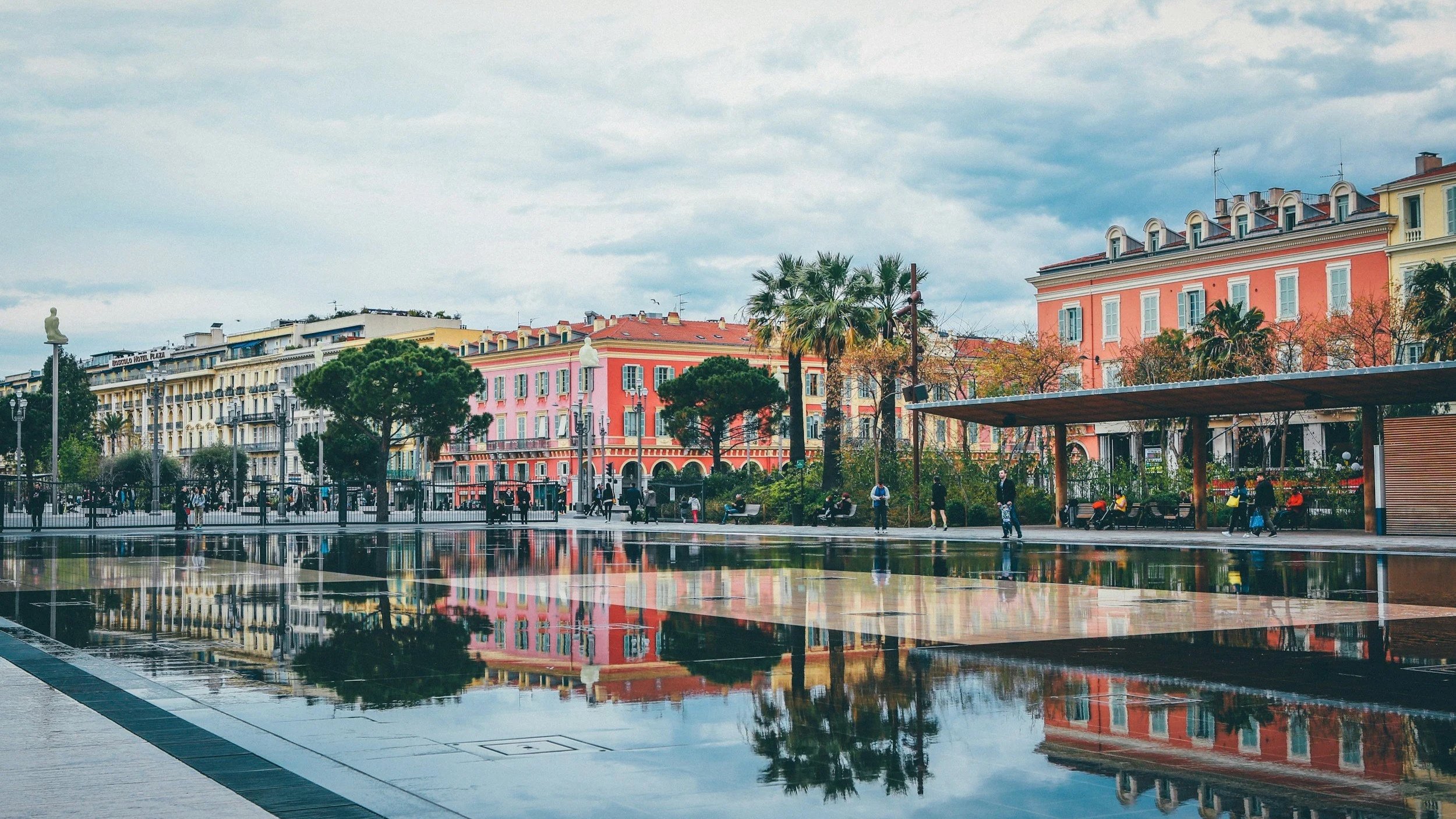
The best South of France itinerary combines the Provençal coast around Marseille and Cassis with the French Riviera towns east of Nice, and needs 10 days to do properly. Seven days covers one region well. Fourteen lets you add inland Provence and cross the border into Italy. The coastal train does most of the work between towns; a car is only worth having for the inland villages.
Here's what makes this itinerary different from most you'll find: it runs west to east, and it doesn't stop at the French border.
Almost every South of France itinerary online starts in Nice and works outward. That's fine, but it means Marseille — France's oldest and most interesting city — becomes an afterthought, and the trip ends abruptly at Menton when Sanremo is thirty minutes further on. Running west to east builds instead of tapering. You start with the grit and history of Marseille, move through the beauty of Provence, and finish in the glamour of the Riviera and the Italian coast.
I'm Tammie. I've travelled to Europe more than 48 times and I run small-group tours along this exact route. This is the itinerary I actually use.
How Many Days Do You Need for the South of France?
Seven days — pick one half. Either the Provençal coast (Marseille, Cassis, Aix) or the Riviera (Nice, Èze, Monaco, Menton). Trying to do both in a week means spending your holiday on trains.
Ten days — the sweet spot, and the itinerary below. Both coasts properly, without rushing.
Fourteen days — everything below plus inland Provence (the Luberon villages, the lavender plateau) and time to sit still occasionally, which is the thing most itineraries forget to build in.
Under five days — choose a single base and take day trips. Nice or Marseille both work well for this.
Pro Tip
The most common mistake I see is over-scheduling. People plan six towns in five days because each one is "only twenty minutes away." Twenty minutes each way, plus the walk to the station, plus waiting, plus finding lunch, and suddenly the day is gone and nobody has actually sat down. Two towns a day is plenty. One is often better.

The 10-Day South of France Itinerary
Days 1–2: Marseille
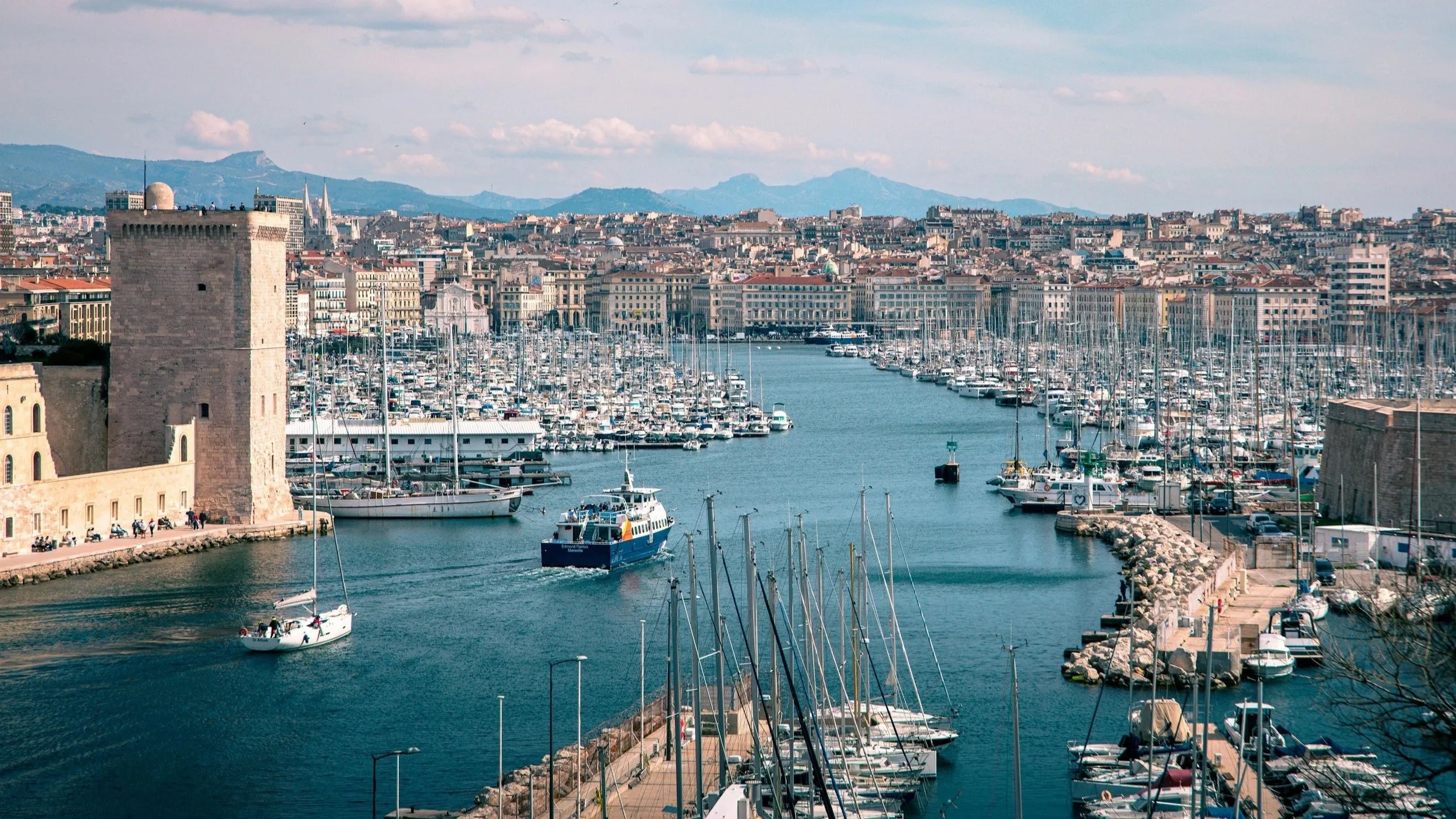
Start where France started. Marseille was founded by Greek sailors around 600 BC and it's still a working port — noisier, more multicultural and considerably more alive than anywhere else on this coast.
Spend your first morning at the Vieux-Port, ideally early enough to catch the fish market on the Quai des Belges. Walk up into Le Panier, the oldest quarter, and get lost in it deliberately. In the afternoon, MuCEM and Fort Saint-Jean on the waterfront, then up to Notre-Dame de la Garde for the view over the whole city at golden hour.
Day two is for the parts most visitors skip: Cours Julien for street art and independent shops, Vallon des Auffes for lunch in a fishing port the size of a swimming pool, and the Corniche walk along the sea.
If you're worried about Marseille's reputation, I've addressed that honestly in my complete guide to Marseille — the short version is that the tourist areas are safe and the fear is out of proportion.
Base: Marseille, 2 nights.
Day 3: Cassis and the Calanques
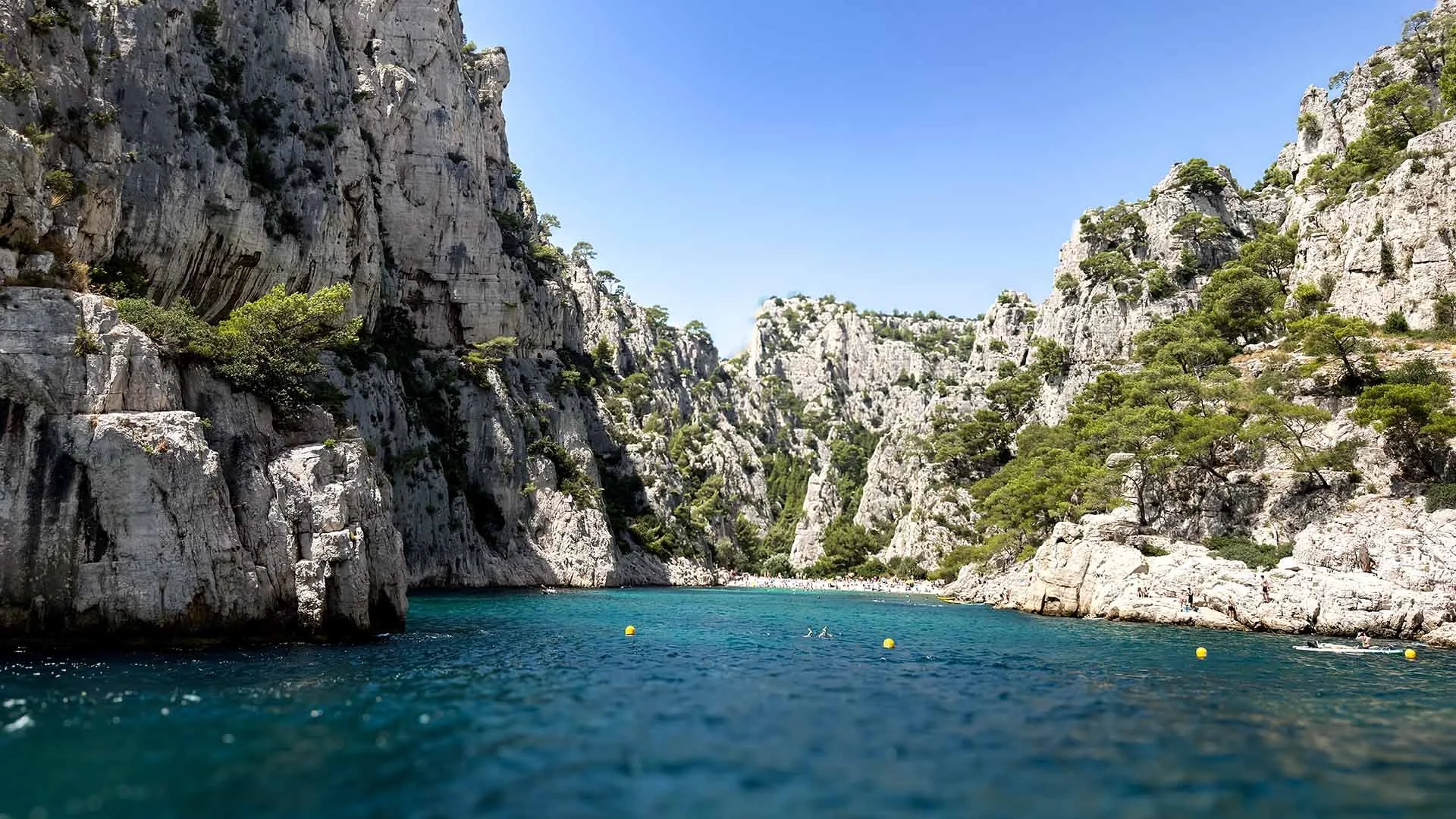
Thirty minutes east and a total change of register. Cassis is a small fishing harbour beneath Cap Canaille, one of the highest sea cliffs in France, at the edge of the Calanques National Park.
Take a boat out in the morning — the calanques are narrow turquoise inlets cut into white limestone, and you only see them properly from the water. Lunch on the harbour. Afternoon walking up to the château for the view, or swimming.
Stay the night if you can. Cassis empties when the day-trippers leave around 6pm, and the town that remains is the reason to come. Full details in my Cassis and the Calanques guide, including the €10 rosé-and-oysters happy hour that made my week.
Base: Cassis, 1 night.
Days 4–5: Aix-en-Provence and Inland
Aix-en-Provence is the elegant counterpoint to Marseille — plane-tree avenues, fountains everywhere, Cézanne's studio, and the best markets in the region on Tuesday, Thursday and Saturday mornings.
With a car, day five opens up the countryside: the Luberon villages (Gordes and Roussillon in particular), the Valensole plateau for lavender if you're here between late June and mid-July, and vineyards throughout.
Base: Aix-en-Provence, 2 nights.
Days 6–7: Nice
Move east to the Riviera proper. Nice is the obvious base and deserves the position — the Promenade des Anglais, Vieux Nice with its flower market, and Castle Hill for sunset over the bay.
Day seven, go west along the coast: Antibes for its walled old town and the Picasso Museum, then Cannes for the Croisette. Both are short hops on the train.
Base: Nice, 4 nights (days 6–9).
Day 8: Villefranche-sur-Mer and Èze
The best day of the trip, and it's two stops from Nice.
Villefranche-sur-Mer is eight minutes away by train — a deep-water bay ringed with pastel houses, a genuinely beautiful beach, and Rue Obscure, a covered medieval street running under the old town. It's the prettiest harbour on the coast and quieter than anywhere comparable.
In the afternoon, up to Èze — a medieval village stacked on a rock 430 metres above the Mediterranean, with the Jardin Exotique at the summit. There's no train station in the village; the 82 or 83 bus climbs up from the coast. Go late in the day when the coach groups have gone. I’ll be adding my complete Èze guide for timings and what to see soon.
Day 9: Monaco and Menton
Monaco is thirty minutes from Nice by train. The Prince's Palace, the Casino square, the harbour full of implausible boats. Half a day is enough unless you're gambling.
Then continue to Menton, the last French town before Italy — yellow and apricot facades, gardens everywhere, and a slower pace than anywhere else on the Riviera. It's the one people wish they'd given more time.
Day 10: Sanremo, Italy
Here's the part most itineraries leave out.
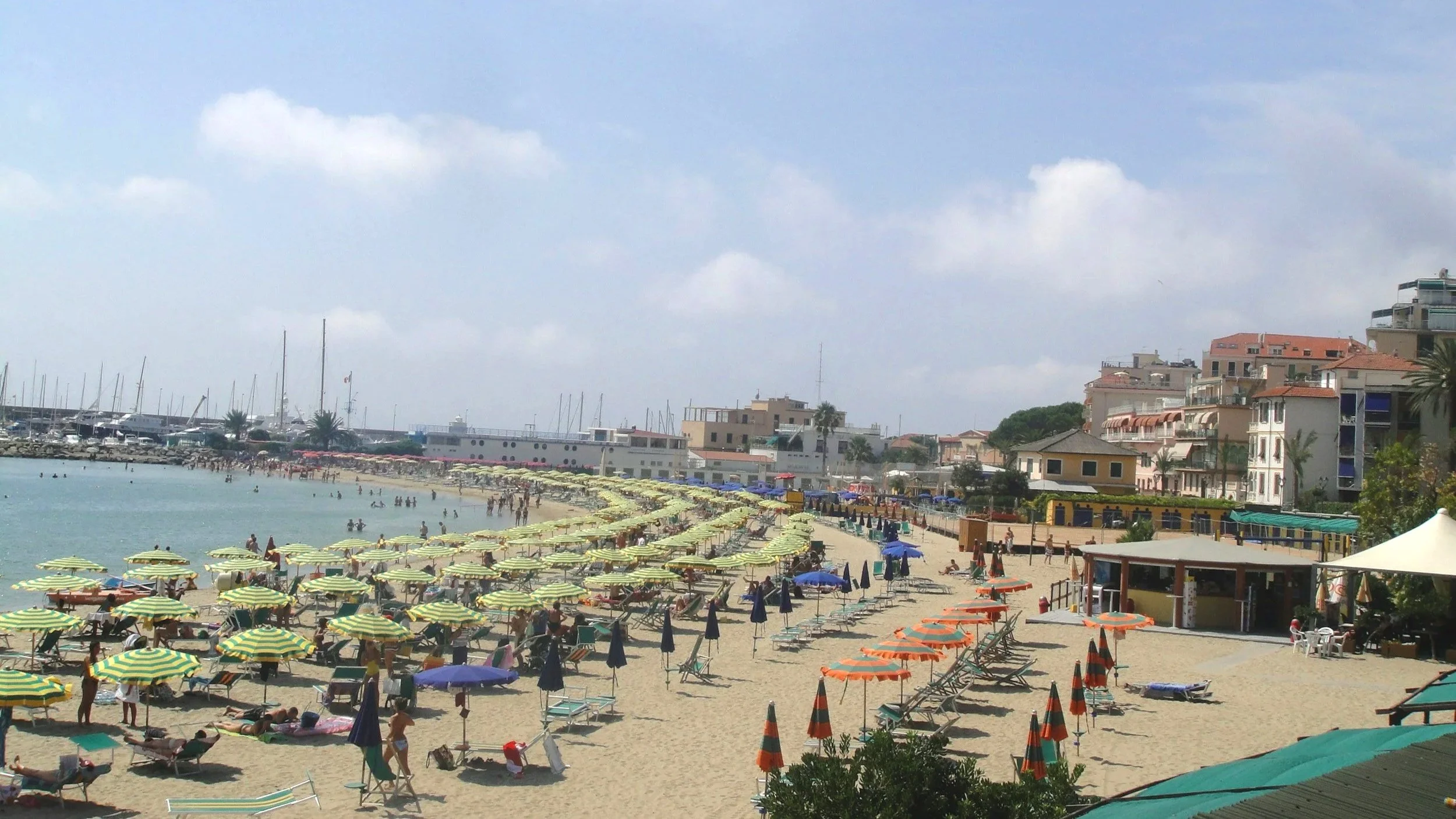
Sanremo is roughly forty minutes past Menton, across the border, and it's a different world for very little extra effort: an Italian Riviera resort town with a Russian Orthodox church, a casino, a medieval old town called La Pigna stacked up the hillside, and food that shifts abruptly from Provençal to Ligurian.
Crossing into Italy for a day costs you almost nothing and gives the trip a proper finish. It's why our Riviera tour runs Sanremo to St Tropez rather than stopping at the border.
Getting Around: The Train Does Most of the Work
The coastal railway between Marseille and Ventimiglia is the backbone of this trip, and it's excellent. Nice to Monaco is around 25 minutes. Nice to Villefranche is eight. Marseille to Cassis is about 20.
You do not want a car on the coast. Parking in Nice and Marseille is expensive and scarce, the low-emission zones are restrictive, and car break-ins are one of the few genuine crime risks in the region.
You do want a car inland, for days 4–5. Hire it in Aix and drop it before you reach Nice.
Two things that catch people out: Cassis station is a 40-minute walk from the town (there's a shuttle bus), and St Tropez has no railway station at all — it's reached by road or by boat from Sainte-Maxime.
What Is the Best Month to Visit the South of France?
May, June and September are the best months. Warm, bright, sea warm enough to swim by June, and without the July–August crush.
Late June to mid-July if lavender is a priority — the Valensole plateau is only in bloom for a few weeks.
July and August are hot and very busy. Everything is open, the sea is warmest, but you'll queue and pay more for it. Calanque hiking trails may close for fire risk.
October to April is quiet and mild, with beautiful light. Some coastal businesses close for the winter.
We run our French & Italian Riviera tour in June for exactly these reasons.
Adjusting the Itinerary
7 days — cut days 4–5 (Aix and inland) and day 10 (Sanremo). You'll have Marseille, Cassis, Nice, Villefranche, Èze, Monaco and Menton, which is a full and satisfying week.
14 days — add two nights in the Luberon villages, a day in Avignon for the Palais des Papes and the Pont du Gard, and two extra nights on the Riviera so you can add St Tropez and Saint-Paul-de-Vence. This is closest to the route we run as a guided tour.
By train only — skip days 4–5 entirely, or reach Aix by TGV and use local buses for the villages. The coastal section works perfectly without a car.
With children — Marseille, Cassis and Villefranche are the strongest stops. Boats, beaches and islands beat old towns and museums every time.
The Route, at a Glance
DaysBaseHighlights1–2MarseilleVieux-Port, Le Panier, MuCEM, Notre-Dame de la Garde3CassisCalanques by boat, harbour, Cap Canaille4–5Aix-en-ProvenceMarkets, Cézanne, Luberon villages, lavender6–7NiceVieux Nice, Promenade, Antibes, Cannes8NiceVillefranche-sur-Mer, Èze9NiceMonaco, Menton10NiceSanremo, Italy
Doing It as a Guided Tour
Everything above is designed so you can do it independently, and plenty of people should.
If you'd rather not handle the logistics, we run this coast as two different trips. The French & Italian Riviera tour covers Sanremo, Menton, Monaco, Èze, Villefranche, Nice, Antibes, Cannes and St Tropez. The European Burlesque Touropens with four nights in Marseille and a day in Cassis before heading north to Alsace and Paris — I've written about Colmar and the Alsace villages separately.
And if you're arriving by cruise ship rather than staying, one day ashore in Marseille is its own particular puzzle, which I've solved a few times now.
Much love, TJ Travels xoxo
FAQ
How many days do you need for the South of France? Ten days covers both the Provençal coast and the French Riviera properly. Seven days is enough for one of the two. Fourteen lets you add inland Provence and cross into Italy without rushing.
What is the nicest part of the South of France? The stretch between Villefranche-sur-Mer and Menton is the prettiest coastline, and Èze the most spectacular village. For character and food rather than looks, Marseille and Cassis are hard to beat.
What is the best month to go to the South of France? May, June and September. Warm and bright without peak-season crowds. Late June to mid-July for lavender.
Can you do the South of France without a car? Yes, along the coast — the train line from Marseille to the Italian border is excellent. A car is only genuinely useful for the inland Provence villages.
Should you start in Nice or Marseille? Marseille, if you're travelling west to east. It puts the grittiest stop first and finishes with the Riviera and Italy, which builds rather than tapers.
Is the Amalfi Coast or the French Riviera better? The Amalfi Coast is more dramatic; the French Riviera is far easier to travel, with an excellent train line and more variety within a short distance. For a first trip with limited time, the Riviera is the more forgiving choice.
Is 7 days enough for the South of France? For one region, comfortably. For both the Provençal coast and the Riviera, it's tight — you'd be moving every day or two.